

Key Takeaways
Rolling resistance is the friction generated between a roller ski wheel and the pavement. Unlike cross-country skiing where snow conditions are visible, rolling resistance is an invisible variable. Due to manufacturing inconsistencies, wheels of the same model can vary by 5–10%, creating unfair advantages (“free speed”) or disadvantages. FF Rollerskis AS has solved this by introducing an advanced Rolling Resistance Tester, ensuring fair competition and accurate training data.
Table of Contents
Rolling Resistance – A Gamechanger in roller skiing and why it matters
Glide and resistance are crucial for performance in modern cross-country skiing competitions. Countries like Norway invest heavily in ski waxing and equipment technology. They employ full-time technicians and utilize advanced grinding machines to optimize ski performance. However, not all nations have the same resources, resulting in significant differences in competitive conditions due to the equipment alone.
Introducing the 1st FF Universal Brake System for Rollerskis: Simplicity Meets Safety
Roller Skiing and the Fairness Factor: Why Rolling Resistance Matters
What is the “Hidden Variable” in Roller Skiing? In traditional cross-country skiing, snow conditions are visible and affect everyone. In roller skiing, the playing field is defined by rolling resistance—the friction between the wheel and the pavement. While often overlooked, this invisible force is a game-changer. Significant variations in rolling resistance mean that race results can be decided by equipment rather than athleticism.
Experience Authentic Norwegian Roller Skis:
Why Fairness is Critical for Skiers
For a skier, integrity is everything. When rolling resistance varies between competitors, it poses a fundamental question: Are the conditions fair?
The Solution: To ensure the sport remains a test of fitness and technique—not just engineering—standardizing rolling resistance is essential. It ensures that when you cross the finish line, the result is real.
The Competitive Edge: A skier with lower rolling resistance gains “free speed,” potentially skewing race results.
Training Accuracy: For athletes using roller skiing to train for the winter season, inconsistent resistance leads to inaccurate data regarding speed and effort.
The Hidden Variable: Why All Wheels Are Not Created Equal
It is a common assumption that two wheels of the same model are identical. However, the reality of roller skiing is far more complex. Roller ski wheels inevitably demonstrate varying levels of rolling resistance, even when compared within the exact same brand and production batch.
This inconsistency stems from the organic nature of the manufacturing process itself. Subtle fluctuations in rubber composition, curing temperatures, and urethane density create invisible differences in how a wheel interacts with the pavement.
While these differences might seem microscopic in the factory, they are monumental on the road. A variation in rolling resistance of just 5–10% creates a massive disparity. Over the course of a race, this translates into a significant competitive advantage—or a heartbreaking disadvantage—that is entirely unrelated to an athlete’s fitness.
What If There Were Brakes on Roller Skis? Meet the Innovation Changing the Game
This is why we call Rolling Resistance – A Gamechanger in roller skiing. It is the invisible force. It dictates whether the race is decided by human potential. It also determines if it is a roll of the dice in the production line.
Currently, there is no straightforward method to measure rolling resistance. This allows people to take advantage of these differences unfairly. Wheels from the same manufacturer may appear identical but have significant performance differences.
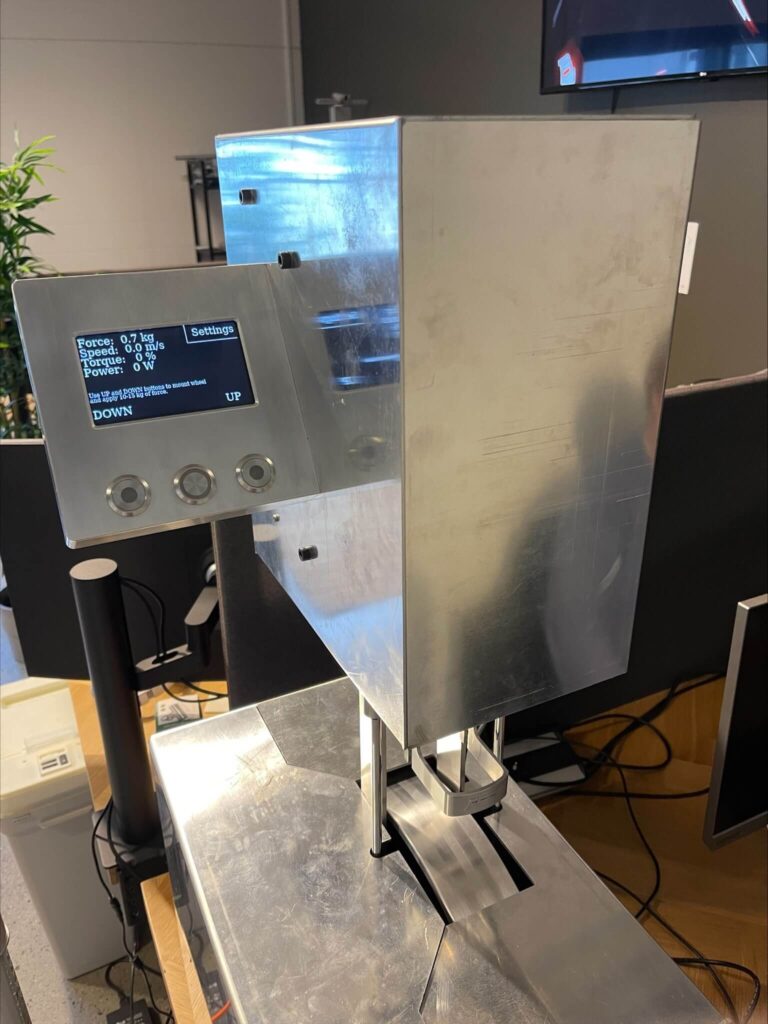

The Solution: FF Rolling Resistance Tester
FF Rollerskis AS has developed an advanced rolling resistance tester to ensure fair competitions and equal training conditions. This technology can now accurately measure and control rolling resistance – a gamechanger in roller skiing.
This machine offers:
- Accurate measurement of rolling resistance
- Fair and equal competition conditions
- Consistent training loads for teams and clubs
- Guaranteed rolling resistance for our roller skis
With FF Rollerskis, you can be sure that your roller skis and wheels provide the exact rolling resistance you need. This ensures better training conditions, more balanced competitions, and sets a new standard in roller skiing!
Experience a new era in roller skiing – with FF Rollerskis AS.
Made in Norway – Norway’s Official Origin Label
Demystifying the Science of Speed
Understanding rolling resistance is key to unlocking your true potential on the road, yet it remains one of the most misunderstood topics in roller skiing.
Whether you are looking to optimize your race pace or ensure fair training conditions, clarity is essential. Below, we answer the most frequently asked questions about friction, testing standards, and how wheel technology impacts your performance.
What does rolling resistance mean?
Rolling resistance is the force that resists the motion when a wheel rolls on a surface. In the context of roller skiing, it is the friction generated between the wheel’s urethane and the pavement. It is the “hidden variable” in the sport because it directly dictates how much energy an athlete must exert to maintain speed.
What is the standard for rolling resistance test?
Historically, the roller ski industry has lacked a unified, transparent global standard, leading to significant inconsistencies where wheels from the same batch could vary by 5–10%. FF Rollerskis is changing this by introducing a new standard of precision. By utilizing advanced testing protocols to guarantee that wheels are paired effectively, ensuring that competitions are decided by the athlete’s fitness, not by manufacturing anomalies.
How do you measure rolling resistance?
While some manufacturers rely on simple “rollout” tests or theoretical calculations, these methods are often inaccurate. Accurate measurement requires dynamic testing under load. FF Rollerskis has developed a proprietary Rolling Resistance Tester that subjects wheels to consistent weight and speed. This machine precisely calculates the energy loss (friction) for every wheel, allowing us to sort and guarantee the resistance level of our products.
What is high rolling resistance?
High rolling resistance means the wheel generates more friction against the pavement, resulting in a slower speed for the same amount of effort. In roller skiing, wheels with high resistance (often labeled as #3 or #4) are not “bad”—they are essential tools. They are intentionally designed to simulate heavy, wet snow conditions or to provide a higher-intensity workout without the need for steep terrain.